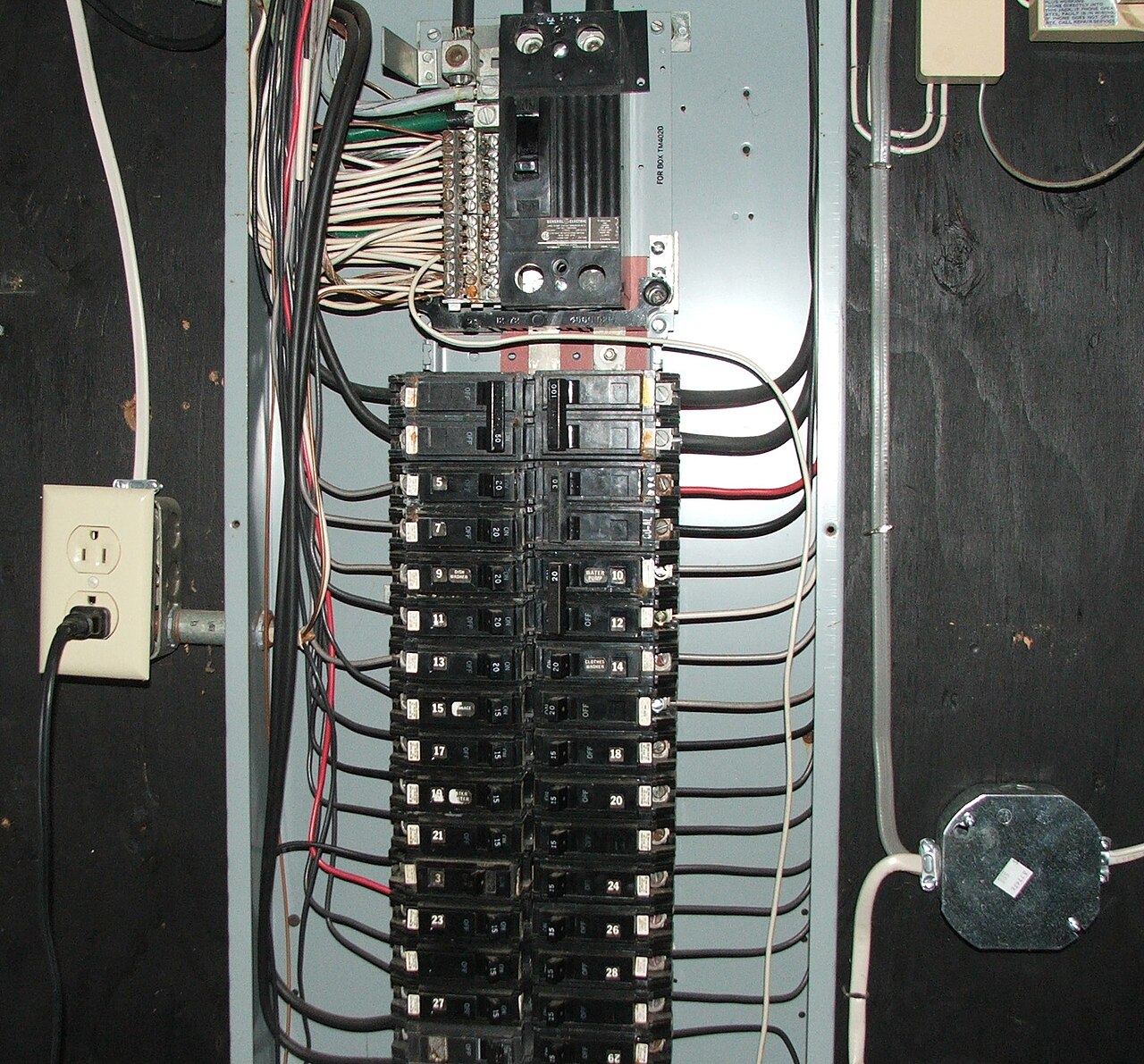
What a 100 to 200 amp electrical panel upgrade costs in 2026, what the price includes, and when an EV charger, heat pump, or old panel makes it worth doing.
Typical cost, installed · 100 to 200 amp upgrade · 2026
$1,500–$4,500most U.S. homes
Enter the total installed price from your quote.
- Panel replacement, same size
- $1,000–$3,500
- Upgrade to 200 amp
- $1,800–$4,500
- Large service, 300 to 400 amp
- $3,500–$12,000
In this guide
- Cost at a glance
- Cost by amperage
- Subpanel or full upgrade?
- Why homeowners upgrade
- Signs you need a new panel
- What the price includes
- Extra costs on your quote
- Tax credits and rebates in 2026
- Example quote: 100 to 200 amp service upgrade
- Do you need 200 amps?
- Why this is not a DIY job
- How to get a fair price
- How long the upgrade takes
- Frequently asked questions
Most homeowners pay $1,500 to $4,500 to upgrade an electrical panel in 2026, and the average is about $3,000. Fixr puts the average at $3,000 and the 200 amp upgrade at $1,800 to $4,500. This Old House says most homeowners pay $1,300 to $3,000 to go from 100 to 200 amps, and Inch Calculator lists $1,500 to $3,000. That covers the new panel, breakers, labor, and the electrical work to connect it.
The price depends mostly on whether the job stays inside the panel or reaches the service entrance, meaning the mast, meter socket, and utility connection. Swapping a panel in place is the cheap end. Replacing the service wiring is the expensive end, and local electricians often quote more than the national guides: a Minnesota and Wisconsin installer lists $2,500 to $6,500 for the panel alone and $4,000 to $9,000 or more with a new mast and meter, and a Northern Virginia electrician lists $3,500 to $7,500 for a 200 amp upgrade in 2026. An electric furnace or heat pump is a common reason to upgrade, and our furnace replacement cost guide covers that equipment.
Key points
- Most panel upgrades cost $1,500 to $4,500 installed. The national average is about $3,000.
- A 100 to 200 amp upgrade runs $1,800 to $4,500. New meter sockets, service masts, and utility line work push the price to the top of that range or past it.
- A subpanel costs roughly $400 to $1,900 installed, but it adds circuits and not capacity.
- The federal tax credit of up to $600 for a 200 amp panel ended for property placed in service after December 31, 2025. State-run rebates of up to $4,000 exist for income-qualified households, but not in every state.
- Federal Pacific and Zinsco panels should be replaced. In nearly every jurisdiction a panel job needs a permit and an inspection, and most states require a licensed electrician.
Electrical panel upgrade cost at a glance
| Item | Typical cost |
|---|---|
| National average, installed | About $3,000 |
| Range for most homeowners | $1,500 to $4,500 |
| Panel replacement, same amperage | $1,000 to $3,500 |
| Upgrade to 200 amp | $1,800 to $4,500 |
| Subpanel, installed | $400 to $1,900 |
| Permit and inspection | $50 to $300 permit, $125 to $250 inspection |
| Typical panel lifespan | 25 to 40 years |
Cost by amperage
Amperage is the total current your home can draw. Older homes often have 60 or 100 amp service. NYSERDA says a 200 amp panel is typically enough to power a home. The guides we checked do not price 60 amp panels separately, since a 60 amp home is usually upgraded to 100 amps or more.
| Service size | Fixr, installed | This Old House, installed |
|---|---|---|
| 100 amp | $1,200 to $1,800 | $800 to $1,500 |
| 150 amp | $1,500 to $2,800 | Not listed |
| 200 amp | $1,800 to $4,500 | $1,300 to $3,000 |
| 300 amp | $3,500 to $7,500 | $1,800 to $3,500 |
| 400 amp | $8,000 to $12,000 | $2,000 to $4,000 |
The two sources roughly agree up to 200 amps and split above it. Bob Vila says a 400 amp service is typically built from two 200 amp panels. For a 300 or 400 amp job, treat both columns as the outer edges and get written quotes.
Bob Vila’s lower national average of $1,274, with a range of $522 to $2,082, is for replacing a panel in place. It does not include new service wiring or a meter socket. Inch Calculator says a 200 amp upgrade can reach $5,000 when the power line to your house only supports 150 amps.
Subpanel or full upgrade?
A subpanel is a second breaker box fed from your main panel, for a garage, addition, or workshop. Fixr lists the box at $100 to $400, and installed prices run roughly $400 to $1,900 across Qmerit, This Old House, and Bob Vila.
A subpanel does not add capacity. Everything it feeds still draws from the same main service, so a 100 amp home stays a 100 amp home. If you are out of breaker spaces but your total load is fine, a subpanel is the cheaper fix. If the problem is demand from an EV charger or heat pump, you need a larger service.
Why homeowners upgrade
- EV charger: Qmerit says EV charging draws 16 to 80 amps. On a 100 amp service that can be most of your spare capacity.
- Heat pump or electric furnace: Qmerit puts electric furnaces at 60 to 80 amps. The U.S. Department of Energy notes that a panel upgrade can be needed to add an electric heat pump. Replacing cooling too? See our AC replacement cost guide.
- Electric water heater or range: Large 240-volt appliances each need their own circuit. See our water heater replacement cost guide.
- A generator: A standby generator changes how your panel is wired, so tell your electrician before the work starts.
- Federal Pacific and Zinsco panels: Bob Vila says to replace them as soon as possible. They were installed in homes built from the 1950s to the 1980s, and their breakers may not trip when they should.
- Insurance: Cincinnati Insurance says almost every insurer has taken a stance against Federal Pacific breakers and recommends replacing the entire panel. Ask your agent before you buy or renew.
Signs you need a new panel
Fixr and Bob Vila list similar warning signs:
- Breakers trip often, lights flicker, or you unplug one appliance to run another.
- The panel shows rust or burn marks, buzzes or crackles, smells like burning, or is hot to the touch.
- Your service is under 100 amps, or the panel is a Federal Pacific, Zinsco, or Stab-Lok model.
- The panel is 25 to 40 years old or more.
What the price includes
A complete service upgrade should list each of these items on the quote.
- The panel and main breaker: a 200 amp box costs $300 to $400 by itself, according to Fixr.
- Meter socket and service entrance: This Old House describes the electrician replacing the meter socket and service cable, with a new weather head and conduit above the meter.
- Grounding: two copper ground rods driven about 6 feet apart, wired to the system.
- Outdoor emergency disconnect and surge protection: under the 2020 and 2023 NEC, where adopted, replacing the service equipment on a one- or two-family home triggers an outdoor emergency disconnect (230.85) and a Type 1 or Type 2 surge protective device at the service (230.67). A few states narrow the disconnect rule, so ask whether the quote includes them.
- Utility disconnect and reconnect: the local utility disconnects the cables from your house and reconnects them after the work. Ask who schedules it.
- Permit and inspection: a permit runs $50 to $300 or more, and an initial inspection $125 to $250, per Fixr and Bob Vila.
Labor is 40% to 60% of the total, according to Fixr, and electricians charge $40 to $120 an hour. Bob Vila lists $50 to $150 or more.
Extra costs that can show up on your quote
- New meter socket: $200 to $800 installed per Fixr, or $100 to $650 per Bob Vila.
- Utility line or service drop: Inch Calculator says a replacement can more than double the job. Ask who pays for utility-side work.
- AFCI and GFCI breakers: $50 to $100 each for AFCI and $5 to $100 each for GFCI. Which circuits need them depends on the NEC edition your state enforces (most are on the 2020 or 2023 edition; Texas and Minnesota moved to the 2026 edition in 2026) and on local amendments, so ask which circuits your local code requires them on.
- Wiring corrections and repairs: $500 to $4,500 for rewiring work on the panel, per Fixr and Bob Vila. A damaged bus bar in the old panel can add $500 to $2,000, per This Old House.
- Moving the panel: $800 to $4,000 depending on the source, plus a few extra days of labor.
- Wall access: $100 to $450 per Fixr, plus drywall patching and paint.
- Whole-house rewiring: $12,000 to $20,000, per Bob Vila. A new panel does not fix old, damaged branch wiring.
Ask your electrician to check the power line to your house as well as the panel. A line that supports only 150 amps is what pushes some 200 amp upgrades toward $5,000, according to Inch Calculator.
Tax credits and rebates in 2026
The federal Energy Efficient Home Improvement Credit covered a panel upgrade with a capacity of 200 amps or more, up to $600 per item. The IRS says the credit applies to improvements made through December 31, 2025. A panel upgrade completed in 2026 does not qualify.
State programs are a separate matter. The Department of Energy’s Home Upgrades page lists a rebate of up to $4,000 for an electrical panel under its home energy rebate programs, now called the High-Efficiency Electric Home Rebate (HEEHR) program, and says your state, territory, or Tribe manages the rebates and decides what qualifies.
DOE rules limit the rebate to households below 150% of area median income (100% of the cost below 80% AMI, 50% between 80% and 150%), and DOE guidance effective May 29, 2026, allows rebates in existing homes only for replacing electric equipment with more efficient electric equipment, not for switching from gas. Some states, such as Minnesota, pay for a panel only when it is needed for another qualifying appliance, and some programs have not opened yet, so check your state energy office before you sign.
Example quote: 100 to 200 amp service upgrade
Here is an illustrative breakdown for replacing a 100 amp panel with a 200 amp panel in a house with overhead service, a new meter socket, and a new mast. Your quote will be organized differently, but it should cover the same items.
| Line item | Cost |
|---|---|
| 200 amp panel with main breaker | $350 |
| Meter socket, installed | $500 |
| Mast, weather head, conduit, and service cable | $650 |
| Ground rods and bonding | $250 |
| New breakers, including two AFCI | $300 |
| Labor (two electricians, one day) | $1,600 |
| Permit | $200 |
| Inspection fee | $150 |
| Total | $4,000 |
Labor is 40% of this total, at the low end of Fixr’s 40% to 60% share. A job that stays inside the panel and skips the meter and mast would price lower, in the bottom half of the $1,800 to $4,500 range.
Do you need 200 amps?
Not every new appliance needs a bigger service, since some replace equipment already on the panel. NYSERDA says a home that already has a 200 amp panel may need only minor changes, such as combining existing circuits. Smart panels and load-sharing devices can add an EV charger or heat pump without a bigger service, but Qmerit prices a smart panel at $2,000 to over $5,000.
| Your situation | Likely next step |
|---|---|
| 100 amp service, adding a heat pump or EV charger | Ask for a load calculation. A 200 amp upgrade is likely. |
| 200 amp panel, adding one new circuit | Usually just a breaker and a circuit. No upgrade. |
| Out of breaker spaces, total load is fine | A subpanel may be enough. |
| Federal Pacific, Zinsco, or Stab-Lok panel | Replace the panel, even at the same amperage. |
| Service under 100 amps | Upgrade, and expect meter and service work. |
Why this is not a DIY job
Bob Vila says replacing a panel is not a DIY project and calls for a licensed electrician, and This Old House says the same. The service conductors ahead of your main breaker stay live unless the utility disconnects them, and a mistake there can cause a fire or serious injury.
In nearly every jurisdiction the work needs a permit and an inspection. Bob Vila warns that insurers may not cover damage from a panel installed by an inexperienced homeowner. The part you can do yourself is cosmetic, such as patching drywall.
How to get a fair price
- Get at least three written quotes. Scope varies widely.
- Confirm the license. Electrician licensing is set by each state, and a few leave it to counties or cities. Check the license number with your state licensing board, and ask for proof of insurance.
- Ask whether the quote includes the meter socket, mast, and service cable. If they are missing, you are comparing different jobs.
- Ask who coordinates the utility. Find out who schedules the disconnect and reconnect, and whether utility fees are yours.
- Ask whether a load calculation was done. The NEC method (Article 220, renumbered Article 120 in the 2026 edition) shows whether 200 amps is enough for your planned EV charger or heat pump.
- Ask who pulls the permit and pays the inspection fee. Get it in writing, along with the panel’s circuit spaces and included breakers.
How long does a panel upgrade take?
Fixr says installation takes 4 to 8 hours with two electricians, and longer depending on the wiring. Bob Vila also gives 4 to 8 hours or more. Fixr puts the inspection at 15 minutes to an hour. Power is off while the work is under way, and the utility has to disconnect and reconnect your service. Plan on one to two days on site when the meter and mast are replaced.
The lead time is often longer than the work. Utilities schedule disconnects on their own calendar, and permit and inspection queues vary by city. Start early if you have a deadline, such as a home sale or an EV delivery date.
Frequently asked questions
How much does it cost to upgrade from 100 amp to 200 amp?
Fixr lists $1,800 to $4,500 for a 200 amp upgrade, and the national average for all panel upgrades is about $3,000. This Old House says $1,300 to $3,000. A job that includes a new meter socket, mast, or utility line sits at the high end.
How much does it cost to replace a panel without upgrading the amperage?
Fixr lists $1,000 to $3,500 for a replacement and $1,000 to $1,600 for a 100 amp replacement. Bob Vila puts the average at $1,274, with most homeowners paying $522 to $2,082.
Is there a federal tax credit for a panel upgrade in 2026?
No. The credit of up to $600 for a 200 amp panel applied to improvements made through December 31, 2025, according to the IRS. Check the Department of Energy’s home energy rebate information for state-run programs that may pay income-qualified households up to $4,000, often only when the panel is part of a larger electric upgrade.
Do I need a new panel for an EV charger?
Not always. Qmerit says EV charging draws 16 to 80 amps. On a 200 amp panel with spare capacity, you may only need a new circuit. On a 100 amp service with electric heat or a large range, ask for a load calculation first.
How long does an electrical panel last?
This Old House puts the lifespan at 25 to 40 years, and Bob Vila lists a panel of that age as a sign to replace it. Qmerit says 20 to 40. A panel in good condition can outlast that, but known problem brands such as Federal Pacific and Zinsco should be replaced regardless of age.
Last reviewed: October 31, 2026. Costs are estimated ranges compiled from published cost guides, manufacturer information, and government sources. Your quote will depend on your home, your location, and the contractor you hire. Photo: Where (English Wikipedia), public domain. Read our editorial policy and disclaimer.