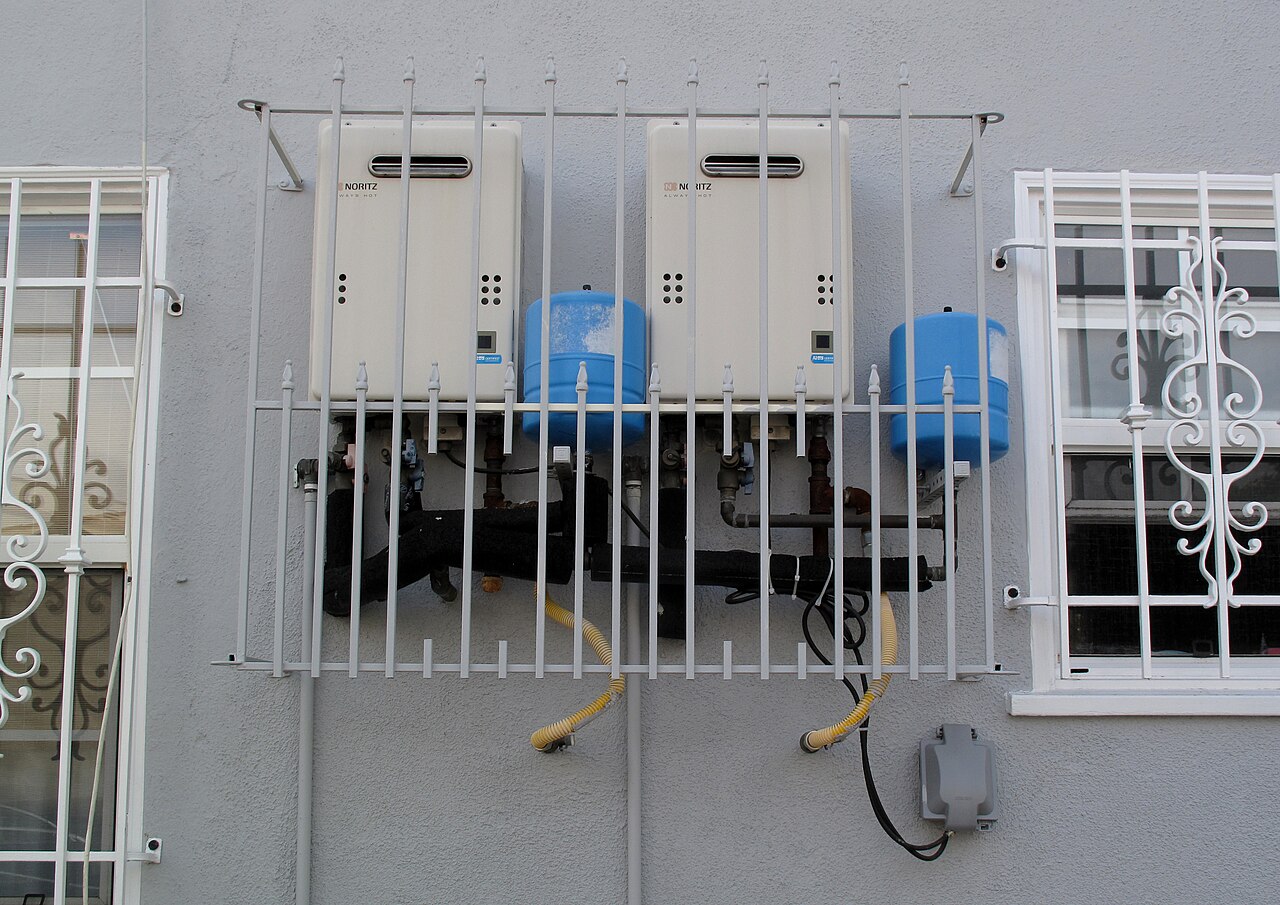
What a new water heater costs installed in 2026, how tank, tankless, and heat pump models compare, and when a repair is the smarter call.
Typical cost, installed · same-location swap · 2026
$900–$3,000most U.S. homes
Enter the total installed price from your quote.
- Standard tank, gas or electric
- $900–$1,800
- Tankless
- $1,400–$4,000
- Heat pump (hybrid)
- $1,200–$4,600
In this guide
- Cost at a glance
- Cost by water heater type
- Cost by tank size and household
- Unit price versus labor
- Extra costs on your quote
- Tax credits and rebates in 2026
- How long water heaters last
- Repair or replace? The 50% rule
- Emergency and after-hours replacement
- Example quote: 50-gallon gas tank
- How to get a fair price
- Frequently asked questions
Most homeowners pay $900 to $3,000 to replace a water heater in 2026. The water heater replacement cost for a standard 40- or 50-gallon tank swapped in the same spot is typically $900 to $1,800 installed, with an average near $1,300. Tankless models run $1,400 to $4,000, and heat pump (hybrid) models run $1,200 to $4,600. Fixr’s 2026 data puts the average across all types at $1,400, and Angi and HomeAdvisor data reported by Bob Vila gives a typical tank range of $874 to $1,765.
Three things move the price most: the type of heater, the tank size, and what your house needs besides the heater, such as new venting, a gas line, an expansion tank, or a permit. An emergency call after hours can multiply the labor, so it pays to know your options before your heater fails.
Key points
- Most water heater replacements cost $900 to $3,000 installed. A standard 40- to 50-gallon tank runs $900 to $1,800.
- Tankless units cost $1,400 to $4,000 installed and heat pump models $1,200 to $4,600. Both cost more upfront and less to run.
- Labor is roughly 18% to 50% of the total. Venting, a gas line, an expansion tank, and a permit can each add to it.
- The federal tax credit for heat pump water heaters does not apply to units installed in 2026. State and utility rebates may still help, mainly if you are replacing an electric unit.
- Use the 50% rule: if a repair costs half the price of a new installed unit, or the tank leaks, replace it.
- After-hours and emergency calls commonly add 1.5x to 3x to the labor rate.
Water heater replacement cost at a glance
| Item | Typical cost |
|---|---|
| Standard 40 to 50 gallon tank, installed | $900 to $1,800 |
| Tankless, installed | $1,400 to $4,000 |
| Heat pump (hybrid), installed | $1,200 to $4,600 |
| Full range, all types | $500 to $4,600 |
| Emergency or after-hours labor | 1.5x to 3x the standard rate |
| Typical lifespan | Tank 8 to 12 years, tankless about 20 years |
These figures blend Fixr’s 2026 data, Angi and HomeAdvisor figures reported by Bob Vila, and HomeGuide’s member-reported projects ($600 to $1,800 for a typical tank). They assume a like-for-like swap: same fuel, same location, and existing hookups in good shape.
Cost by water heater type
| Type | Installed cost | What to know |
|---|---|---|
| Gas tank | $700–$2,700 | Needs a vent and gas line. The most common swap. |
| Electric tank | $600–$3,500 | Simple hookup, but costs more to run. |
| Propane tank | $700–$2,500 | Needs a propane line and a vent. |
| Tankless | $1,400–$4,000 | Higher upfront cost, longer life. |
| Heat pump (hybrid) | $1,200–$4,600 | Needs a 240-volt circuit, air space, and a drain. |
Tank heaters store 30 to 80 gallons of hot water and are the cheapest to buy and install. Gas and electric models cost about the same to swap, but not to run: ENERGY STAR puts annual fuel cost at $200 to $300 for a gas tank and $400 to $600 or more for an electric tank. One date to know: under a DOE efficiency standard finalized in May 2024, electric tank heaters larger than about 35 gallons made on or after May 6, 2029 must meet levels that in practice require heat pump technology. The rule applies to units manufactured after that date, not to heaters already in homes.
Tankless heaters heat water only when you open a tap. Angi’s 2025 data puts the average installed price at $2,622, with a range of $1,399 to $3,889. A gas tankless unit usually costs more to install than an electric one because it needs a larger gas line and its own venting. Bob Vila lists a gas line at up to about $1,000 more and tank-to-tankless conversion labor at about $2,500. An electric tankless unit skips the vent but draws a lot of power, so older homes can need electrical work. ENERGY STAR says an ENERGY STAR gas tankless saves a family of four about $95 a year versus a gas tank, a slow payback, so tankless suits you best if you want a unit that lasts about 20 years.
Heat pump water heaters, also sold as hybrid models, pull heat from the surrounding air instead of generating it. ENERGY STAR says a family of four can save about $550 a year compared with a standard electric heater, with a payback of three to six years. It prices the unit alone at $1,500 to $3,000, with labor and materials adding $1,000 to $3,000, so some installs land above Fixr’s range. See ENERGY STAR’s installation cost guide.
Cost by tank size and household
A bigger tank costs more to buy and install. Rheem’s sizing guide recommends 30 to 40 gallons for one or two people, 40 to 50 for two to four, 50 to 55 for four or five, and 75 gallons or a tankless unit for five or more. The better test is your busiest hour: pick a model whose first-hour rating (gallons delivered in an hour) at least matches your peak-hour use.
| Tank size | Typical household | Installed cost |
|---|---|---|
| 30 gallons | 1 to 2 people | $550–$2,100 |
| 40 gallons | 2 to 4 people | $550–$2,300 |
| 50 gallons | 2 to 5 people | $700–$2,500 |
| 75 gallons | 5 or more people | $1,100–$3,400 |
Going from 50 to 75 gallons moves the range up by roughly $400 at the low end and $900 at the high end (Fixr’s installed ranges). If you are swapping a gas heater for a heat pump model, ENERGY STAR advises sizing up.
Unit price versus labor
The heater itself is only part of the bill. ENERGY STAR lists unit prices of $450 to $1,200 for an electric tank, $500 to $1,500 for a gas tank, $800 to $2,000 for a gas tankless unit, and $1,500 to $3,000 for a heat pump model.
Angi says labor is about half of a typical tank replacement, and a pro usually needs two to three hours. Fixr puts labor at 18% to 50% of the total, or $300 to $1,500, with plumbers charging $45 to $200 an hour. Tankless and fuel switches take longer, so a cheap unit does not always mean a cheap job.
Extra costs that can show up on your quote
- Venting: $300 to $1,000 for a power vent fan and its electrical connection, according to Fixr. Bob Vila says a power vent costs $300 to $600 more than a direct vent, plus $300 to $500 for wiring.
- Gas line: $275 to $825 to add or extend one, per Bob Vila. If your furnace shares the flue, ask the installer to check the vent sizing. Our furnace replacement cost guide covers that side.
- Switching fuel: converting from gas to electric adds roughly $550 to $2,300 in electrical wiring, per Bob Vila, and may need a panel upgrade.
- Expansion tank: $40 to $350. The International Plumbing Code (Section 607.3 in the 2018 and later editions, where adopted) requires one when a check valve, pressure-reducing valve, or backflow preventer closes the system, and the Uniform Plumbing Code used in California and much of the West has a similar rule.
- Permit: $25 to $300 for a standard replacement, and $50 to $300 more if you add a gas line. Fixr reports permits as high as $1,500. Most cities require a permit and an inspection for a water heater swap. Licensing is set by each state or city, not federally, so expect the gas connection to be work for a plumber or gas fitter licensed where your state requires it.
- Haul-away of the old unit: usually included. If it is itemized, expect $75 to $500.
- Relocating the heater: new water, gas, or electric rough-in runs $400 to $1,800 (Fixr).
- Code upgrades: a drain pan, a relief valve discharge pipe, or a mixing valve may be required where you live. In California, state law (Health and Safety Code Section 19211) requires every new or replacement water heater to be strapped against earthquakes. Some local codes and utility rebate programs require a thermostatic mixing valve with a new water heater, including heat pump models. If the new heater burns gas or propane, the CPSC recommends a CO alarm on every level of the home.
- Heat pump extras: a 240-volt circuit, a condensate drain, and 450 to 700 cubic feet of surrounding air (ENERGY STAR gives both figures), so a small closet may need a louvered door.
Before you compare two quotes, check which of these are included. Venting, the expansion tank, the permit, and haul-away often explain the gaps between bids.
Tax credits and rebates in 2026
The federal Energy Efficient Home Improvement Credit paid 30% of the cost of an ENERGY STAR heat pump water heater, up to $2,000 a year. According to the IRS, it covers improvements made through December 31, 2025, and ENERGY STAR describes the same window. A heater installed in 2026 does not qualify. If you installed one in 2025, you can still claim the credit on your 2025 return using Form 5695.
Rebates are a separate track. The Department of Energy’s home upgrades page lists a High-Efficiency Electric Home Rebate of up to $1,750 for an ENERGY STAR heat pump water heater. States, territories, and Tribes run these programs. Two limits matter in 2026. The rebate is for households under 150% of area median income: up to 100% of the cost below 80% of the median and up to 50% between 80% and 150%. And under DOE Program Notice 26-2, effective May 29, 2026, it pays only for replacing an existing electric water heater (or for new construction), not for switching from gas or propane. Rebates reserved before a state switched over can still be paid. Only some states have programs open, so check your state energy office before you buy.
Many utilities and municipalities offer $300 to $1,000 for a heat pump water heater, according to ENERGY STAR. Search your ZIP code in the ENERGY STAR Rebate Finder before you sign.
How long water heaters last and when to replace
Fixr and Bob Vila both put the life of a tank heater at 8 to 12 years. Tankless units last about 20 years, per ENERGY STAR, and Fixr gives 15 to 20. Watch for these signs that a heater is near the end:
- The tank is more than 8 to 10 years old and problems are becoming frequent.
- Water pools around the base or you see moisture or rust on the tank. A cracked tank cannot be repaired.
- Hot water looks rusty, or you hear rumbling or popping from sediment in the tank.
- You run out of hot water faster than you used to, or only get lukewarm water.
Maintenance tip: a University of Hawaii building maintenance text says to flush the tank annually, inspect the anode rod every two years, and replace it about every five years. A new rod costs $20 to $50 plus about an hour of labor, per Angi data cited by LendEDU.
Repair or replace? The 50% rule
Contractors generally advise against putting more money into an old heater once a repair reaches about 50% of the price of a new unit. Using the $1,300 average, that threshold is $650. Angi contractor estimates reported by LendEDU put an electric thermostat at $150 to $200, a heating element at $200 to $300, and a relief valve at about $200. The average repair across all causes is $600.
| Heater age | Repair cost | Share of $1,300 replacement | Verdict |
|---|---|---|---|
| 6 years | $250 (heating element) | 19% | Repair it |
| 9 years | $450 (element and thermostat) | 35% | Repair, but start budgeting |
| 12 years | $700 (second repair in 18 months) | 54% | Replace it |
It is a guideline, not a law. Replace regardless of the math if the tank is leaking, since a cracked tank cannot be fixed. LendEDU’s contractors treat one repair in a year as normal wear and two or three within 18 months as a sign to replace. Waiting has a cost too: LendEDU cites $1,300 to $5,550 for water damage from a leaking or burst tank.
Emergency and after-hours replacement
LendEDU, citing Angi contractor estimates, puts the emergency premium at 1.5x to 3x the standard rate: about 1.5 times for a weekday after-hours call, double on a Saturday, and triple on a holiday. Many companies also charge a flat trip fee of $100 to $350. On a job with $600 of normal labor, that is roughly $900 on a weeknight and $1,200 on a Saturday, before any trip fee.
If your heater fails, shut off the cold water supply to the tank and the gas or power. A steady leak needs help now. A heater that simply has no hot water can often wait for a daytime appointment, which would save $300 to $600 in the example above.
Example quote: 50-gallon gas tank
Here is an illustrative breakdown for a 50-gallon natural gas tank heater replacing an old one in the same spot, with existing venting in good shape. Your quote will be organized differently, but it should cover the same items.
| Line item | Cost |
|---|---|
| 50-gallon gas water heater | $700 |
| Labor (one plumber, about three hours) | $600 |
| Expansion tank | $120 |
| New gas flex line, water connectors, and relief valve discharge pipe | $80 |
| Permit | $100 |
| Haul-away of old heater | $75 |
| Total | $1,675 |
Labor is about 36% of this total, inside Fixr’s 18% to 50% range. If your quote is far above this and none of the extras above apply, ask for an itemized breakdown.
How to get a fair price
- Get at least three written, itemized quotes from licensed plumbers. It is the same approach we recommend for an AC replacement.
- Ask for the exact make, model, tank size, and first-hour rating. It lets you compare bids for the same product, not just the same price.
- Ask what code upgrades are included. Expansion tank, drain pan, venting, and any required strapping or mixing valve should be on the quote or ruled out in writing.
- Confirm the permit and haul-away. Ask who pulls the permit, whether the fee is included, and whether the old unit is removed.
- Compare warranties. ENERGY STAR requires at least six years on the sealed system of a heat pump water heater and on the heat exchanger of a gas tankless unit. Ask separately how long the installer warrants labor.
- Ask whether the price is flat or hourly.
Frequently asked questions
How much does a 50-gallon water heater cost installed?
Fixr puts a 50-gallon tank at $700 to $2,500 installed, and most gas or electric swaps land between $900 and $1,800. The high end reflects venting changes, code upgrades, or a high-cost area.
Is a tankless water heater worth the extra cost?
It can be if you want a unit that lasts about 20 years and never runs out of hot water. The energy savings alone are modest: ENERGY STAR estimates about $95 a year for a family of four versus a gas tank. Expect to spend $1,400 to $4,000 installed, and more if the gas line or venting needs upgrades.
Is there a federal tax credit for a heat pump water heater in 2026?
No. The credit covered units installed through December 31, 2025, per the IRS. State and utility rebates may still apply, including the federally funded High-Efficiency Electric Home Rebate of up to $1,750 where your state offers it, if you are replacing an existing electric water heater and your household earns less than 150% of area median income.
How long do water heaters last?
Tank models typically last 8 to 12 years and tankless models about 20 years. Annual flushing and checking the anode rod help a tank reach the upper end of that range.
Should I replace my water heater and furnace together?
Only if both are near the end of their lives. If they share a flue, ask one contractor to price both and check the venting. Our furnace replacement cost guide covers the other side of the job.
Last reviewed: October 31, 2026. Costs are estimated ranges compiled from published cost guides, ENERGY STAR, and IRS and Department of Energy pages. Your quote will depend on your home, your location, and the contractor you hire. Photo: Downtowngal, CC BY-SA 4.0. Read our editorial policy and disclaimer.