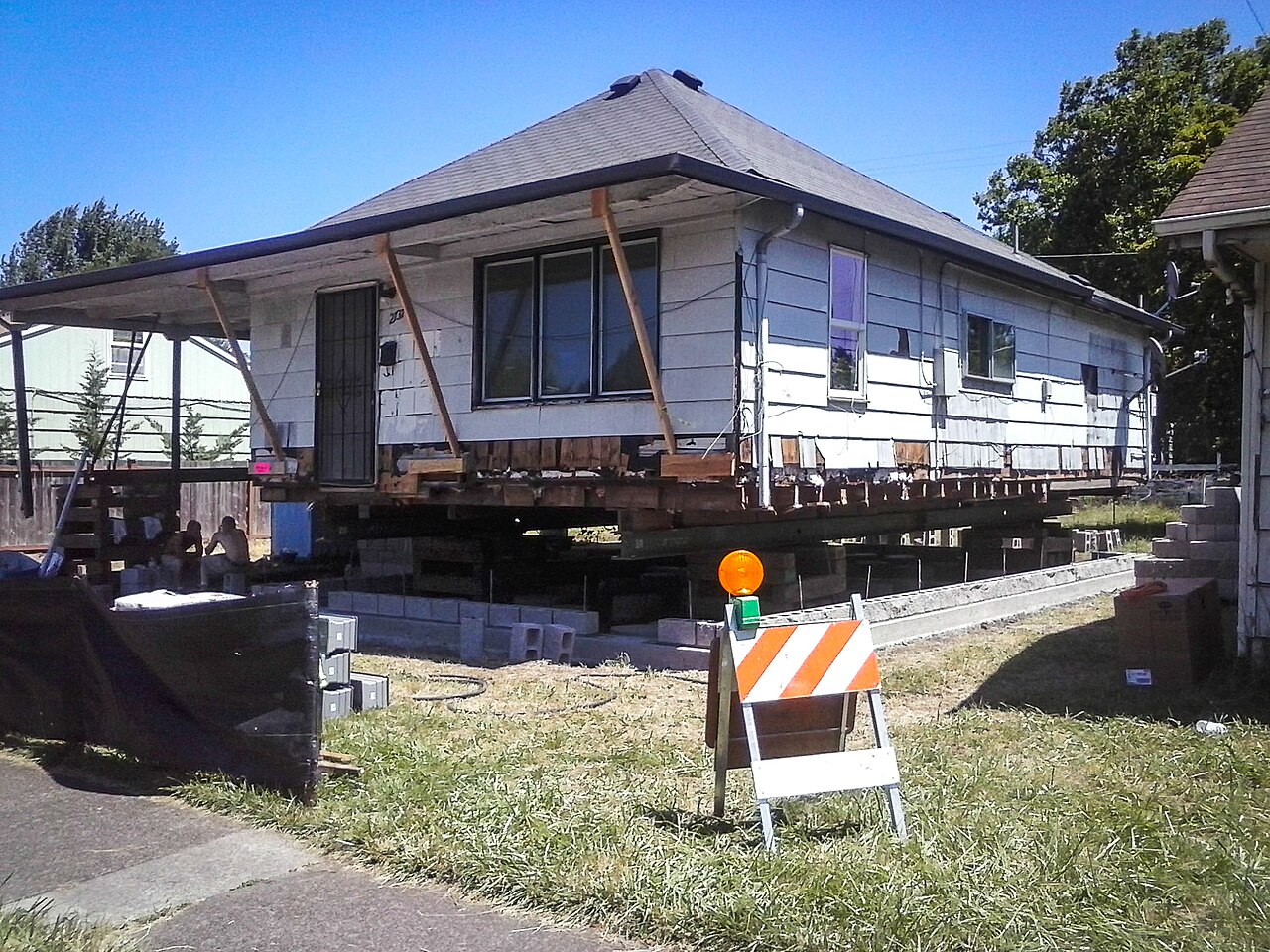
What foundation repair costs in 2026 by method, from a $250 crack injection to a $30,000 pier job, and how to tell which fix your house actually needs.
Typical cost, all repair types · 2026
$2,200–$8,100most U.S. homeowners
Enter the total price from your quote.
- Cracks and slab lifting
- $250–$1,300
- Wall stabilization
- $4,000–$12,000
- Piers and underpinning
- $10,000–$30,000
In this guide
- Cost at a glance
- Cost per pier and by number of piers
- Slab jacking, mudjacking, and foam
- Wall stabilization: carbon fiber and anchors
- Crack repair: structural or cosmetic?
- What drives the price, and extra costs
- Signs of foundation problems
- Does insurance cover foundation repair?
- Financing and warranties
- Repair now or wait?
- Example quote: 8-pier repair
- How to get a fair price
- Frequently asked questions
Most homeowners pay $2,200 to $8,100 for foundation repair, and the national average is about $5,200. Those figures come from Angi data as reported by This Old House, and Bob Vila’s guide lands nearly the same, at $2,176 to $7,833. The range is pulled down by small jobs: sealing a crack costs $250 to $800, and lifting a sunken slab costs $500 to $1,300.
If the house itself has settled, the job changes. Steel piers run roughly $1,500 to $3,000 each (concrete piers start near $1,000), a typical home needs around 10, and a full pier job comes to $10,000 to $30,000. Severe sinking can pass $20,000 on its own, and full replacement costs $20,000 to $100,000. Before you sign anything, pay an independent structural engineer $300 to $1,000 to say what is wrong. It is the best money you will spend on this repair.
Key points
- Most foundation repairs cost $2,200 to $8,100, with a national average near $5,200.
- Piers cost about $1,500 to $3,000 each installed. A typical pier job runs $10,000 to $30,000.
- Crack injection is $250 to $800, slab jacking is $500 to $1,300, and wall stabilization is $4,000 to $12,000.
- An independent structural engineer’s report costs $300 to $1,000 and protects you from unneeded piers.
- Homeowners insurance usually does not cover settling or earth movement. A burst pipe or other covered event can be an exception.
Foundation repair cost at a glance
| Repair | Typical cost |
|---|---|
| National average, all repair types | About $5,200 |
| Most homeowners pay | $2,200 to $8,100 |
| Crack injection | $250 to $800 per crack |
| Slab jacking (mudjacking) | $500 to $1,300 |
| Wall stabilization (steel or carbon fiber) | $4,000 to $12,000 |
| Piers, per pier installed | $1,500 to $3,000 |
| Pier job on a typical home | $10,000 to $30,000 |
| Whole-foundation lifting and leveling | $20,000 to $23,000 |
| Structural engineer’s report | $300 to $1,000 |
Cost per pier and by number of piers
Piers, also called underpinning, transfer the weight of the house from soil that has failed to deeper, stable soil or bedrock. This Old House and Bob Vila both put piering at $1,000 to $3,000 per pier. Angi, HomeGuide, and Forbes break it down by type, and their numbers overlap enough to give a working range of $1,500 to $3,000 for most steel pier jobs.
| Pier type | Installed cost per pier | Notes |
|---|---|---|
| Push piers (steel) | $1,500 to $2,700 | Hydraulically driven using the weight of the house. Angi lists about $2,000 and $2,700 on different pages, Forbes about $1,500. |
| Helical piers (steel) | $2,000 to $4,000 | Screwed into the soil. HomeGuide gives $2,000 to $4,000, and Forbes averages $2,375. |
| Concrete piers (poured or pressed) | About $1,000 and up | The lowest per-pier figure in Angi and Forbes data. Local quotes vary a lot. |
Push piers need enough structure weight to drive them, while helical piers suit lighter buildings, additions, and tight access, according to Dalinghaus Foundation Repair, a California, Arizona, and Nevada contractor. Ask why a contractor chose one type over the other.
The total depends on how many piers your house needs. Forbes says most homes need between 5 and 12, depending on size and how much of the foundation has moved, and Angi uses about 10 as a typical job. The table multiplies those counts by $1,500 to $3,000 per pier. HomeGuide’s own examples agree: $6,000 to $12,000 for 3 piers and $20,000 to $40,000 for 10.
| Number of piers | Estimated total |
|---|---|
| 4 | $6,000 to $12,000 |
| 6 | $9,000 to $18,000 |
| 8 | $12,000 to $24,000 |
| 10 | $15,000 to $30,000 |
| 12 | $18,000 to $36,000 |
Angi’s underpinning guides put a typical project at $10,000 to $30,000 and larger full-underpinning jobs at up to $50,000. Replacing a failed foundation outright is rare and costs $20,000 to $100,000, according to Bob Vila.
Slab jacking, mudjacking, and polyurethane foam
Slab jacking pumps material under a sunken concrete slab and floats it back up. It suits garage floors, patios, driveways, and slab floors. It does not replace piers when the footing under your walls has settled. This Old House and Bob Vila put the typical project at $500 to $1,300, and the per-square-foot rates below come from HomeAdvisor and Angi.
| Method | Cost per sq ft | What to know |
|---|---|---|
| Mudjacking (cement slurry) | $3 to $6 | The budget option. Angi’s broader range is $3 to $8. |
| Polyurethane foam (polyjacking) | $5 to $25 | Lighter, cures fast, and costs more. Fixr notes foam costs more than soil-based mudjacking. |
Fixr warns that mudjacking is a poor fit where the soil may expand, and a badly cracked slab often needs replacing instead. Lifting a slab without fixing the water or soil problem under it usually means doing the job again.
Wall stabilization: carbon fiber and anchors
Basement walls that bow inward under soil pressure are fixed a different way than a sinking footing. This Old House and Bob Vila both list wall reinforcement at $4,000 to $12,000, with steel costing more than carbon fiber, and Bob Vila puts bowed-wall repair at $5,000 to $15,000 overall.
| Method | Cost | Best for |
|---|---|---|
| Carbon fiber straps | $350 to $1,000 per strap, spaced about every 4 feet | Mild bowing. Stops further movement but does not usually push the wall back. |
| Wall anchors | $400 to $700 each, about every 5 feet | Deeper bowing. Needs yard access for excavation. |
| Helical tiebacks | $1,000 to $3,000 each | More extensive bowing or leaning, per HomeGuide. |
Strap and anchor figures are Angi’s. Contractors disagree on where straps stop being enough: some say anchors once a wall bows more than about 2 inches, others use 3 inches. Let the engineer decide, not the salesperson.
Crack repair: structural or cosmetic?
Sealing a foundation crack with epoxy or polyurethane costs $250 to $800 per crack, per This Old House and Bob Vila. Epoxy is typically used on dry, stable cracks and polyurethane on cracks that leak, as contractor guides explain. Neither one fixes the reason the crack opened.
| What you see | Usually means | Next step |
|---|---|---|
| Thin vertical crack that has not changed in a year | Cosmetic (concrete shrinkage) | Monitor. Seal for $250 to $800 if it leaks. |
| Crack wider than 1/4 inch, or growing | Possibly structural | Call an engineer. |
| Horizontal crack or inward bow in a basement wall | Structural (soil pressure) | Engineer, then wall stabilization at $4,000 to $12,000. |
| Stair-step cracks in brick or block, plus sticking doors | Settlement | Engineer. Piers are likely. |
| Drywall cracks at door corners that open and close with the seasons | Usually cosmetic | Patch and watch. |
This Old House’s guide to foundation wall cracks says cracks wider than 1/4 inch likely point to significant structural stress, and it flags horizontal cracks as a sign of soil pressure on the wall. Home inspectors do not agree on one width that separates cosmetic from structural, so treat 1/4 inch as a reason to watch closely, not a verdict. A simple test: mark the crack ends with a pencil and date them, then check monthly.
What drives the price, and extra costs on your quote
Pier count is the biggest driver, followed by depth. Soft clay, loose fill, or stable soil that sits far below the surface mean more and deeper piers, which cost more each. Access matters too: a house with a crawl space or a fence-lined yard takes more labor than an open lot, and labor averages about $200 an hour, according to Bob Vila. These items often appear separately:
- Structural engineer’s report: $300 to $1,000 (Bob Vila). This Old House gives $500 to $1,000.
- Geotechnical soil report: $500 to $3,000, only on complex or high-value jobs.
- Permit: $75 to $150 in both guides. Many contractors fold it into the price. Pier work is structural, so nearly every city requires a building permit, and many, such as Haltom City, Texas, and Tampa, Florida, will not issue it without a repair plan or letter signed and sealed by a licensed engineer, then want the engineer’s final report or an inspection before closing it.
- Surprises: deep footings, old repairs, or tree roots can add $1,000 to $2,500, so budget a cushion.
- Landscaping or tree removal: $200 to $500, to reach the foundation. Taking down a whole tree is a separate job; see our guide to tree removal cost.
- Drainage: $2,800 to $6,500 for a drainage system, and $641 to $2,044 for a sump pump (Bob Vila). Water is a common cause of foundation movement, so this fix can be as important as the piers.
- Sealing and waterproofing: $2,300 to $7,300 if the foundation also leaks (This Old House).
Signs of foundation problems
Look for patterns, not one-off flaws:
- Cracks wider than 1/4 inch, horizontal cracks, or stair-step cracks in brick or block.
- Doors and windows that stick all year, or no longer sit flush in their frames.
- Sloping floors you can confirm with a level, or gaps between the walls and the floor or ceiling.
- Basement walls that bulge inward, or a chimney or porch pulling away from the house.
Sticking that comes and goes with humidity is usually just swollen wood. Sticking that stays after a dry spell, especially with cracks, is worth an inspection. Many foundation companies offer a free estimate, but an independent engineer has no pier to sell you.
Does homeowners insurance cover foundation repair?
Usually not. This Old House and Bob Vila both say insurers rarely pay for foundation repair, treating it as maintenance or ground movement. Standard HO-3 policies exclude earth movement: the Insurance Information Institute lists earthquake, landslide, mudslide, and sinkhole among the standard exclusions, and most insurers’ earth movement wording also names settling and shifting soil, which is how settling claims get denied.
The exceptions come from a covered cause. A burst pipe, fire, storm, or a vehicle hitting the house can be covered when it damages the foundation, and a sudden plumbing leak that washes out the soil under the footing can qualify, depending on the policy. Flood and rising groundwater are excluded too, and a separate NFIP flood policy pays for foundation walls damaged by floodwater but not for earth movement such as settling or subsidence, even when the flood caused it. Earthquake and earth movement coverage is sold as an endorsement or a separate policy, usually with a deductible of 5 to 15 percent of the policy limit rather than a flat amount. Read your policy’s exclusions, and ask your agent before a contractor tells you what is covered.
Financing and warranties
Bob Vila lists contractor payment plans, personal loans, and home equity loans as the usual ways to pay. If you are buying or refinancing a house that needs structural work, the FHA Standard 203(k) loan folds repairs into the mortgage. According to HUD, it needs at least $5,000 in repairs and an approved consultant, while the Limited 203(k) is for non-structural work of up to $75,000. Borrowing for the repair does not change the price, so compare quotes before you compare loans.
This Old House notes that many foundation repair services include a transferable warranty, which matters when you sell. Terms vary a lot. In the contractor warranties we reviewed, some require written notice within 30 to 90 days of a sale, some charge a transfer fee, and a “lifetime” warranty can cover less than a 25-year one. Get the document, not a verbal promise, and read what it excludes. If you are also budgeting for an older house’s other big-ticket items, price them separately with our guides to AC unit replacement cost and water heater replacement cost.
Repair now or wait?
Waiting is cheap only when the problem is cosmetic. This Old House says a hairline crack caught early may cost $250 to $800, while untreated damage can reach $10,000 to $15,000 or more. Use this rule of thumb:
| Situation | Best move |
|---|---|
| Stable hairline crack, doors work fine | Monitor for six to twelve months. No repair yet. |
| Leaking crack, no movement | Seal it ($250 to $800) and fix the drainage. |
| Slab or driveway sunk, house is fine | Slab jacking ($500 to $1,300). |
| Wall bowing, cracks widening, or floors sloping | Engineer’s report, then stabilization or piers. |
| Selling soon with known settlement | Get the engineer’s letter and repair quote before listing. Buyers will ask, and seller disclosure forms in many states do too: Texas’s notice, for example, asks about foundation or slab defects, settling or soil movement, and previous structural repairs. |
Example quote: 8-pier repair
Here is an illustrative breakdown for a single-story house with a settled front corner, repaired with eight push piers. Your quote will be organized differently, but it should cover the same items.
| Line item | Cost |
|---|---|
| Structural engineer’s report and repair plan | $650 |
| 8 push piers installed, at $2,150 each | $17,200 |
| Excavation, backfill, and landscaping restoration | $800 |
| Permit | $150 |
| Crack injection, two interior cracks | $1,100 |
| Allowance for hidden obstacles (billed only if needed) | $1,500 |
| Total | $21,400 |
The piers are 80% of this bill. If the engineer had called for six piers instead of eight, the same quote would drop by about $4,300.
How to get a fair price
- Hire your own engineer first. A $300 to $1,000 report from a licensed professional engineer (PE) gives you a repair plan that every contractor must bid against, and it removes the incentive to oversell.
- Get at least three written quotes from insured foundation contractors that hold whatever license your state or city requires (there is no federal contractor license, so check your state licensing board), for the same scope, with the pier count and type on each.
- Ask how the pier count was determined. It should match the engineer’s plan and the measured settlement, not a standard package.
- Ask for the pier type, depth, and load test. A good contractor can tell you the depth reached and the force used on each pier. Ask too for the pier maker’s ICC-ES evaluation report (ESR): helical pier systems are tested to ICC-ES acceptance criteria AC358, and some building departments, New York City among them, will not approve a helical pier without that report.
- Ask what caused the problem, and who fixes it. If poor drainage or a leaking pipe caused the settling, piers alone will not hold.
- Ask about the warranty in writing: its length, what it covers, whether it transfers, and any fee or notice deadline when you sell.
- Confirm the permit and the lift. Ask whether the price includes lifting the house back toward level, and whether you are paying for a permit.
- Skip big deposits. Pay in stages tied to finished work.
Frequently asked questions
How much does foundation repair cost per pier?
Most steel pier jobs run $1,500 to $3,000 per pier installed. Push piers tend to fall at the lower end and helical piers at the higher end, up to about $4,000. This Old House and Bob Vila give a wider $1,000 to $3,000 range.
How many piers does a house need?
Most homes need between 5 and 12, and Angi uses about 10 as typical. At $1,500 to $3,000 each, 10 piers cost $15,000 to $30,000, and Angi’s own range for a job that size starts lower, at $10,000. Your engineer’s plan sets the real number.
How much does a structural engineer cost for a foundation?
Expect $300 to $1,000 for an inspection and written report. Bob Vila gives $300 to $1,000 and This Old House gives $500 to $1,000.
Does homeowners insurance cover foundation repair?
Usually not, because policies exclude settling and earth movement. It may cover damage from a covered event such as a burst pipe, fire, or storm. Earthquake and earth movement coverage is sold as an endorsement or a separate policy, usually with a percentage deductible.
Is mudjacking or foam better?
Mudjacking costs less, at about $3 to $6 per square foot. Foam costs $5 to $25 per square foot but is lighter and cures faster. Neither belongs under a slab where the soil is expanding or washing out, so fix the cause first.
Are foundation warranties transferable?
Many are, but not automatically. Some require written notice within a set window after the sale, and some charge a fee. Check your contract before you list the house.
Last reviewed: October 31, 2026. Costs are estimated ranges compiled from national cost guides (Angi, This Old House, Bob Vila, HomeGuide, Forbes, Fixr, HomeAdvisor), HUD, and contractor sources. Your quote will depend on your home, your soil, your location, and the contractor you hire. Photo: Visitor7, CC BY-SA 3.0. Read our editorial policy and disclaimer.